
China’s AI Film: A New Chapter in History, Production Costs, and Future Possibilities

Every technological milestone begins with someone having the courage to take the first step.
Future Mind AI views China’s Sanxingdui: Future Past through this perspective. The initiative to create and release a feature film produced entirely with AI represents an important experiment in the history of world cinema. Future Mind AI congratulates China for demonstrating the courage to explore new possibilities by applying emerging technologies on a large cinematic scale, beyond the boundaries of conventional filmmaking.
Whenever a new technology or idea is implemented for the first time, it is natural for people to respond with uncertainty, hesitation, and differing opinions. Before accepting something new, people want to evaluate its potential, limitations, and practical value. However, such uncertainty should not close the door to innovation. What we need instead is experimentation, research, constructive criticism, and the willingness to learn from experience.
Future Mind AI believes that the true success of technology is not limited to creating something new. What matters most is how effectively that technology can make human life easier, safer, more creative, and more beneficial to society.
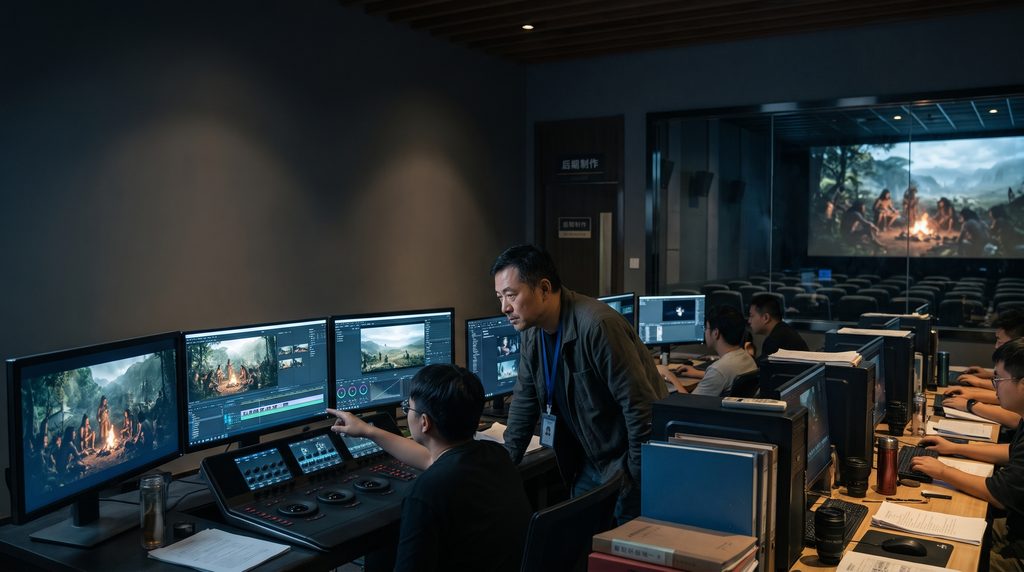
Our Questions About the Film’s Production Costs
At this stage, rather than making a definitive judgment about the film’s storyline, visual quality, or audience acceptance, we are particularly interested in finding answers to one important question:
How much does it actually cost to produce a full-length film using AI, why has that amount been spent, and how much can these costs be reduced in the future?
According to the published report, the film’s production budget exceeded 10 million yuan. However, a detailed and verifiable breakdown of how this amount was spent is essential. It should be clear how much was allocated to research and development, AI models and computing resources, professional personnel, screenwriting, editing, post-production, sound design, promotion, and other associated expenses.
Our intention is not to undermine anyone’s achievement. Rather, we want to understand the economic realities of AI-powered filmmaking. Does the announced budget reflect the direct production cost, or does it also include research, technology development, and other associated expenses?
These questions should be answered through reliable information and transparent accounting. We have no intention of labeling the reported expenditure as exaggerated or merely publicity-driven without supporting evidence.
AI Filmmaking Must Become More Cost-Effective
Many filmmakers, artists, and cinema enthusiasts around the world dream of telling extraordinary stories. However, limited financial resources, the need for large production teams, and the high cost of creating sophisticated visuals prevent many talented individuals from producing even one film a year.
AI has the potential to open new doors in this situation. With proper planning, professional expertise, and effective quality control, AI can assist with certain expensive visual production tasks, previsualization, environment creation, animation, and VFX-related workflows. This could give filmmakers with limited budgets greater opportunities to tell ambitious stories on screen.
However, it would be equally inaccurate to assume that every film automatically becomes inexpensive simply because AI is used. Good storytelling, consistent characters, convincing visuals, editing, sound, human emotion, and quality control still require skill, time, and effort.
Our goal should be to use technology intelligently to reduce unnecessary expenses while expanding creative opportunities.
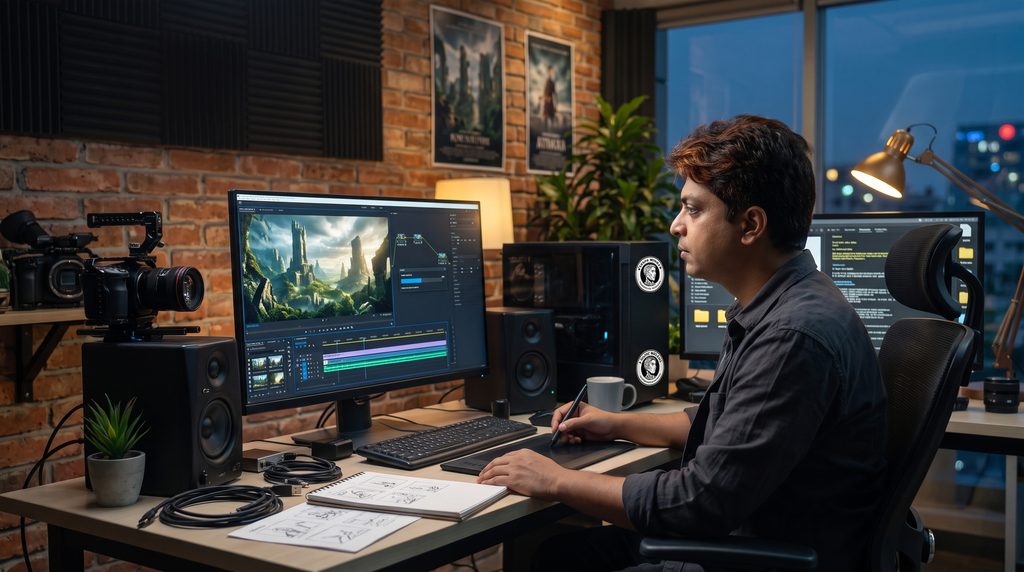
A New Era of Skills for VFX Artists
For professionals who have developed expertise in visual effects, motion graphics, animation, compositing, and digital visual production, AI should not be viewed solely as a competitor. It can also be an opportunity to acquire new skills and expand professional capabilities.
When experienced VFX artists combine their existing expertise with AI-powered workflows, they can become better equipped to work on both conventional and AI-assisted productions. This can broaden their professional opportunities and help them serve a wider range of clients.
We envision a future in which AI does not simply replace human creativity but enhances people’s skills, imagination, and productive capabilities.
At the same time, the fair compensation, consent, recognition, and professional rights of artists must be protected. Technological progress should create new opportunities for creative professionals rather than disregard their contributions.
Bringing AI into the Mainstream of Culture
AI should not remain a subject discussed exclusively by technologists. Its positive applications must become more familiar and accessible across filmmaking, music, painting, animation, literature, education, and other cultural fields.
Experimental projects such as China’s initiative can encourage international discussion, further research, and the development of new filmmaking methods. However, the true progress of any initiative must be assessed through a combination of technological achievement, creative quality, audience experience, financial viability, and social impact.
Future Mind AI believes that the future of AI-powered creativity should be more open, inclusive, and human-centered. Opportunities to share stories with the world should not be limited to major production companies. Independent filmmakers, emerging artists, and creative individuals working with limited budgets should also have the opportunity to bring their visions to life.

Ensuring the Ethical Use of AI Worldwide
As technology advances rapidly, ensuring its responsible use becomes increasingly important. Several issues deserve particular attention: appropriate disclosure of AI-generated content, consent when using real people’s images and voices, respect for copyright and intellectual property, prevention of misleading content, protection of human dignity, and children’s safety.
We believe that promoting the positive use of AI must go hand in hand with preventing its misuse. This requires collective efforts from artists, filmmakers, technology companies, governments, and international organizations.

Future Mind AI’s position is clear: AI should serve humanity, create new possibilities for creativity, and advance technological progress without compromising human values.
Future Mind AI extends its sincere congratulations to China for this initiative. We hope that future AI-generated films will achieve even higher standards, that greater transparency will emerge around production costs, and that AI-powered filmmaking will become increasingly accessible to creative people around the world.
We do not want the future of technology to remain confined to the hands of a few organizations. We want its benefits to reach people, empower creativity, and contribute to the well-being of humanity.
Future Mind AI
AI Ethical Use • AI Awareness • Human-Centered Innovation
Our Commitment: Ethical AI, a Human-Centered Future.