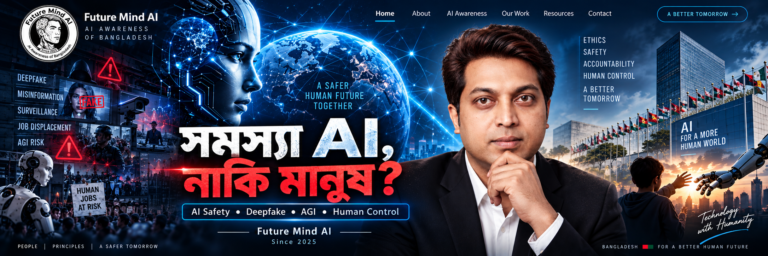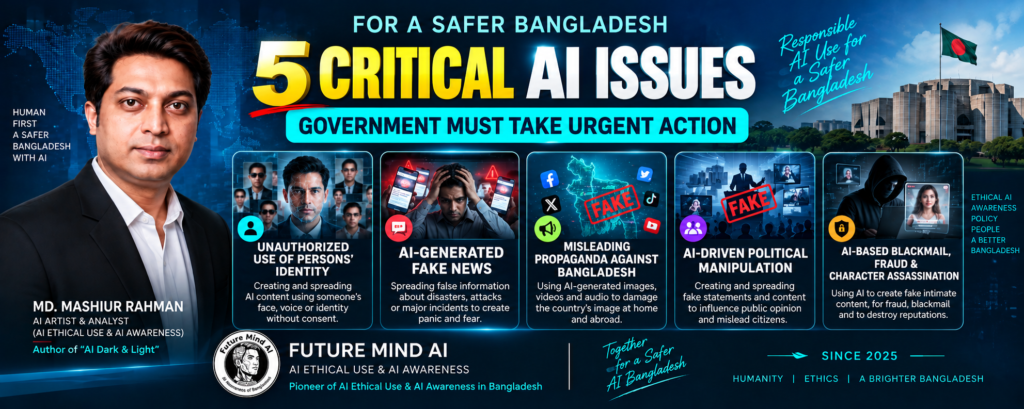
Five urgent AI priorities for Bangladesh at this moment. The use of AI in Bangladesh is increasing rapidly. However, alongside teaching technology or organizing large AI seminars, establishing mechanisms to protect general citizens, individuals, society, and the state from the misuse of AI is now extremely urgent. In light of Future Mind AI’s AI Ethical Use and AI Awareness initiatives, the government should work in a coordinated manner prioritizing five key areas.
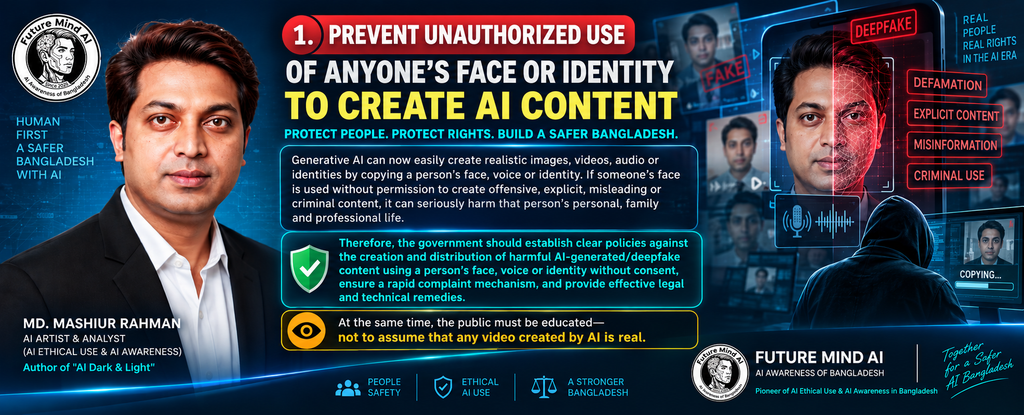
One: Preventing the creation of AI content using someone’s face or identity without permission. Using generative AI, it is now very easy to clone an individual’s photo, face, voice, or identity to create realistic photos and videos. If offensive, obscene, misleading, or criminal content is created using someone’s face without permission, a person’s personal, family, and professional life can be severely damaged. Therefore, clear policies, rapid grievance reporting mechanisms, and effective remedies are necessary against the creation and dissemination of harmful AI-generated or deepfake content using an individual’s face, voice, or identity without consent. At the same time, the general public must be taught that seeing any video created with AI should not automatically be taken as truth.
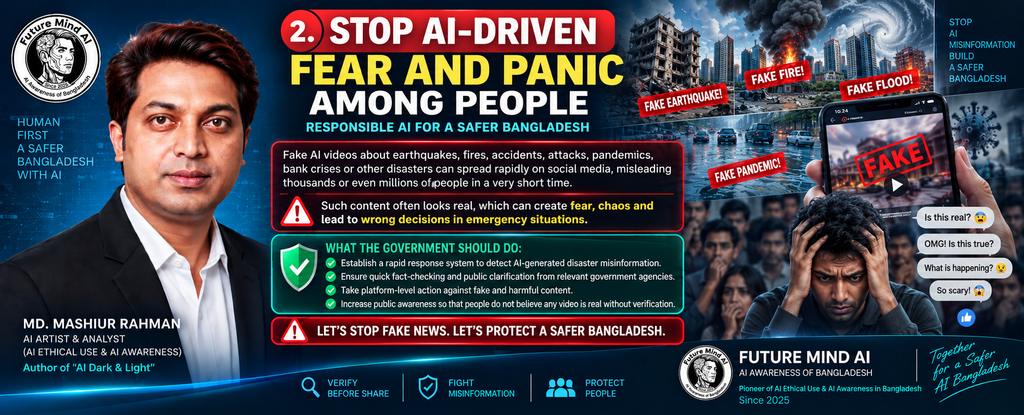
Two: Stopping the spread of panic and fear among people using AI. Creating AI videos of fake earthquakes, fires, accidents, attacks, pandemics, banking crises, or other disasters and spreading them on social media can mislead thousands or hundreds of thousands of people within a short time. Since such content appears realistic, it creates risks of public panic, chaos, and wrong decision-making during emergency situations. The government should establish a rapid response system to identify emergency and disaster-related AI misinformation. Mechanisms for quick fact verification from relevant government agencies, public clarification, and platform-level action against fake content are also needed.
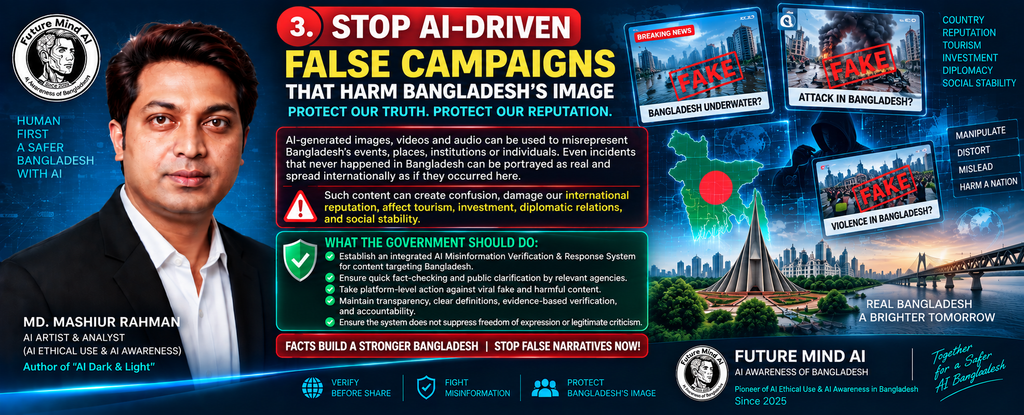
Three: Preventing false propaganda that harms the country’s image using AI. Using AI-generated images, videos, and audio, it is possible to present any event, location, institution, or person in Bangladesh in a completely distorted manner. It is even possible to portray events that never occurred in the country as having happened in Bangladesh and spread them internationally. This is not just a problem of misinformation; if used systematically, it can impact the country’s international image, tourism, investment, diplomatic relations, and social stability. Therefore, an AI Misinformation Verification and Response System needs to be established to rapidly verify suspicious viral AI content spread in the name of Bangladesh. However, to ensure that this system does not become a tool for suppressing freedom of expression or legitimate criticism, clear definitions, evidence-based verification, and accountability are essential.
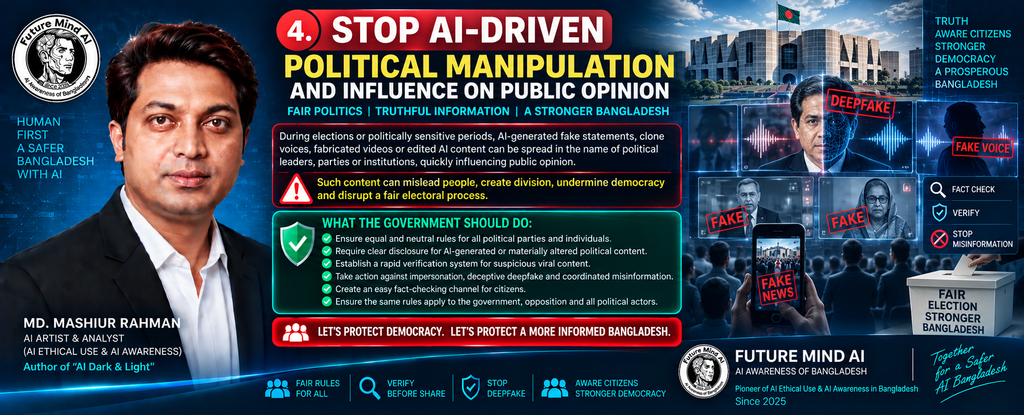
Four: Preventing attempts to create political confusion and influence public opinion using AI. Spreading fake speeches, cloned voices, fabricated videos, or edited AI content in the name of any political figure or organization during elections or politically sensitive times can quickly influence public opinion. This issue must not be solved from a partisan perspective; equal and neutral rules must apply to all political parties and individuals. For political AI-generated or materially altered content, clear disclosures, rapid verification of suspicious viral content, action against impersonation and deceptive deepfakes, and accessible fact-checking channels for citizens can be established. The same rules must apply equally to the government, opposition parties, and other political entities.
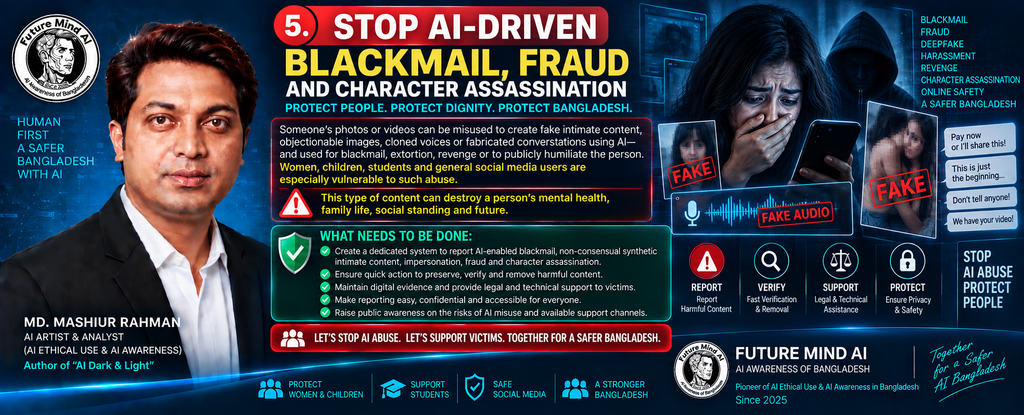
Five: Taking swift action against content created for blackmail, fraud, and character assassination using AI. This is likely one of the most immediate risks for the general public. Using someone’s photo or video, fake intimate scenes, objectionable pictures, fake audio, or fabricated conversations can be created to demand money, threaten, seek revenge, or socially humiliate them. Women, children, teenagers, students, and general social media users are particularly vulnerable to becoming victims. Therefore, rapid reporting and support are needed to tackle AI-enabled blackmail, non-consensual synthetic intimate content, impersonation, fraud, and character assassination. Upon receiving a complaint, a coordinated process should exist for quickly preserving or verifying harmful content, taking necessary legal initiatives, archiving digital evidence, and providing legal and technological assistance to the victim.
Rather than viewing these five problems as isolated incidents, the government can bring them under a centralized National AI Safety, Ethical Use, and Misinformation Response Framework. Its three main pillars can be-Prevention, Verification, and Response. Additionally, spreading AI literacy and ethical use awareness among schools, colleges, universities, government institutions, and the general public is essential.
Future Mind AI (Since 2025) -Pioneer of AI Ethical Use and AI Awareness in Bangladesh. Md. Mashiur Rahman – AI Artist & Analyst, AI Ethical Use and AI Awareness; Founder, Future Mind AI; Author of ‘AI: Dark & Light’.
Key Message: Alongside teaching AI, the infrastructure to ensure the safe, ethical, and responsible use of AI must be built right now. As fast as the technology advances, preparations to prevent its misuse must advance just as fast.